Start with the route, not the camera
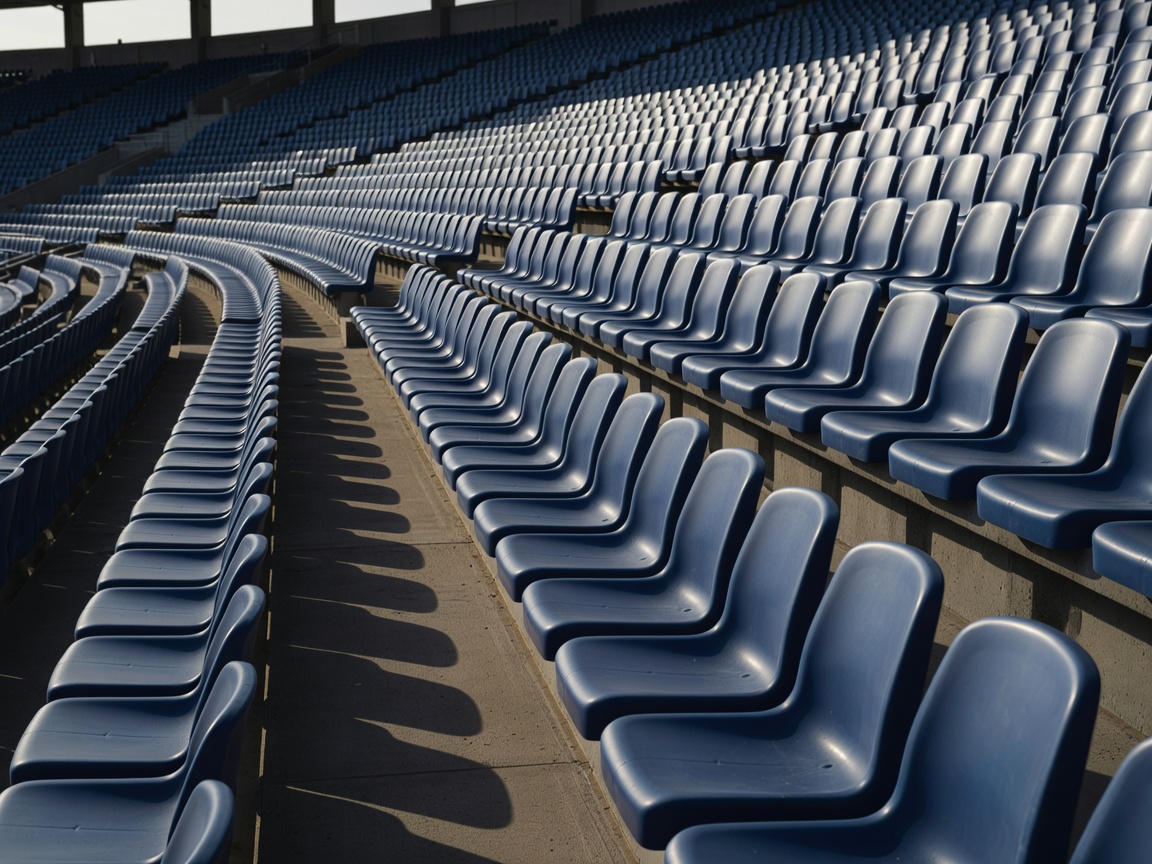
From the concourse, a seating bowl looks orderly. At floor level it is a changing landscape of narrow rows, steps, handrails and folded seat pans. A robot that travels comfortably around a wide perimeter may be unable to enter a single row. Before comparing sensors, facility teams need to establish where the platform can move, stop, turn and retreat without contacting seats or blocking an escape route.
Build the first route around the venue's actual geometry. Identify gates, level changes, stair nosings, temporary barriers and areas where a fall could have serious consequences. Wheeled platforms generally need suitable continuous surfaces; legged platforms still have limits on stair geometry, footing and clearance. A demonstration on one dry aisle does not establish reliable access throughout a wet, recently cleaned seating bowl.
Give each observation an address
A photograph of a cracked seat shell is useful only when a technician can find that seat again. Link evidence to the venue's existing block, row and seat identifiers. Maintain a translation between the robot's map coordinates and the asset register, rather than asking maintenance staff to navigate a separate coordinate system. Record the camera direction as well: adjacent rows can look almost identical in a tight image.
Repeatable positioning improves comparison. Similar camera distance, height, lighting and seat-pan position make changes easier to distinguish from differences in perspective. Record the patrol conditions and retain an appropriate baseline. An automated model that flags a different colour patch may have found a replacement seat, a reflection or a genuine fracture; the surrounding record helps a reviewer tell those possibilities apart.
Define what “covered” actually means
Visible seat-shell breaks, missing number plates, litter obstructions and damaged aisle markings are reasonable candidates for image-based review. Loose fixings, internal corrosion and a seat's resistance to applied load are different questions. An ordinary camera cannot prove a bolt is correctly tightened, and a clear image of the seat front does not reveal the condition of its rear mounting bracket.
For that reason, coverage should describe the surface or component observed, not merely the area visited. Use separate states for observed, partly obscured, inaccessible and requiring review. If a cleaning cart blocks a row, preserve that gap in the report. If seat pans are folded up, acknowledge which surfaces remain hidden. Counting every seat within a camera's field of view as “inspected” creates confidence without the supporting evidence.
Keep the patrol separate from people
After-hours does not mean unoccupied. Cleaners, security staff, caterers and contractors may still be working. Agree a patrol window, communicate the route and define safe responses to an unexpected person or object. The robot must be able to stop safely, and staff need a clear way to report a problem without approaching a moving machine. Avoid running the route during emergency egress testing or when access arrangements are changing.
Collect the minimum imagery necessary. Seats should be the subject, not identifiable workers. Where people enter a frame, apply a documented retention and redaction process appropriate to the deployment. A venue pilot should also test localisation after event furniture moves, surfaces become reflective or access doors change state. Successful navigation on a quiet commissioning day is only the beginning of operational assurance.
Turn findings into maintenance work
Good handovers separate the observation from its interpretation. “Visible split at the right edge of seat shell, block C, row 12” is more useful than an unexplained red risk score. Include the source image, location, time, viewing limitations and reviewer decision. Where a component may present an immediate hazard, the venue's established escalation process should take precedence over a routine report queue.
A competent person decides whether to isolate a seat, inspect a fixing, replace a component or commission further assessment. After repair, capture a verification record and close the work order against the same asset identifier. Over time, the value lies in traceable change and fewer lost observations—not in claiming that the robot checked everything.
Standards are context, not a shortcut
ISO 12100 provides a framework for machinery risk assessment and risk reduction. ISO 13849-1 concerns safety-related parts of control systems, while ISO 13850 addresses emergency-stop principles. ISO 3691-4 concerns driverless industrial trucks and their systems; whether it applies to a particular stadium robot depends on the machine and use case. None of these documents certifies a seating route merely because its name appears in a supplier presentation. Ask competent specialists to establish applicable requirements and evidence.
Minimum useful outcome: a located observation, a known coverage boundary and an accountable human decision.