Choose a small, useful first circuit
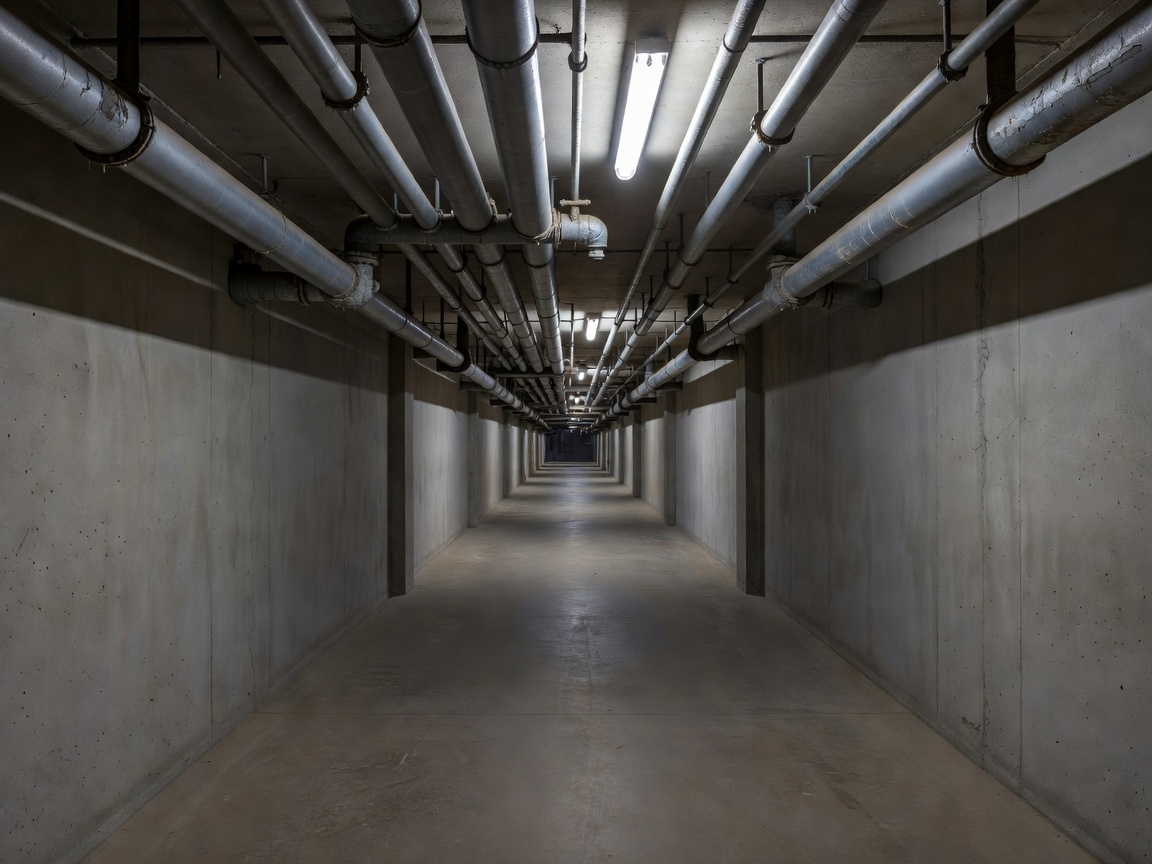
The hidden side of a stadium is not one uniform space. A broad service corridor, a cramped plant room and a loading bay each present different access and sensing problems. Begin with a route that has a clear maintenance purpose: documenting recurring moisture, observing accessible indicators or checking whether agreed access zones remain unobstructed. A tightly defined pilot is easier to validate than a promise to inspect every building service.
List the assets and the observations required at each stop. The route might include a pipe junction visible from a walkway, a plant enclosure viewed from a safe distance and a door that must remain accessible. Define conditions under which the robot should skip a stop, return to a safe position or request assistance. Never treat a locked door or an exclusion barrier as a navigation problem to overcome.
Match the sensor to the question
A conventional camera can document standing water, damaged insulation or an obstructed access panel when those conditions are visible. It may be able to read an accessible gauge if resolution, angle and illumination are sufficient. Optical character recognition should retain the source image and indicate uncertainty; glare or a partly hidden needle can make a confident-looking reading wrong.
Thermal imaging may help identify unusual surface patterns, while acoustic equipment can support particular condition-monitoring tasks when properly specified. Neither automatically diagnoses a pump or identifies the source of a leak. Background noise, load, distance, reflective surfaces and ventilation conditions affect interpretation. If the task calls for gas detection or other safety-critical sensing, use equipment and procedures specifically assessed for that purpose rather than assuming a general inspection payload is suitable.
Record the operating context
A plant room looks different depending on whether its equipment is running, cooling down or awaiting maintenance. A temperature difference that is normal under one load may warrant investigation under another. Where reliable operating data is available, retain its timestamp and source alongside the observation. Do not silently combine stale building-management data with a current image and present the result as a single verified condition.
ISO 17359 gives general guidance for condition monitoring and diagnostics of machines. It can help frame the questions around monitored parameters, baselines and interpretation. A venue still needs a task-specific method and competent reviewers. Repetition only improves knowledge when the underlying observations are comparable and their limitations remain visible.
Protect access and recovery
Service routes may include wet floors, thresholds, cable covers, opening doors and moving delivery equipment. A robot must coexist with workers who may not expect it around a corner. Agree movement rules, warning arrangements and safe stopping behaviour. Test what happens when localisation is lost or a route becomes blocked, and ensure the platform does not obstruct a fire door, escape route or essential plant access.
Recovery planning is as important as route completion. Staff should know who can retrieve the machine and when not to approach it. Battery charging needs a suitable location and an assessed procedure. Hazardous atmospheres, confined spaces and high-voltage areas require specific controls; a standard mobile robot is not presumed suitable for entry. An inaccessible inspection point should remain a documented limitation until an authorised alternative method is arranged.
Keep observation separate from control
Connecting a robot to the venue network introduces another boundary. Use proportionate network segmentation, authenticated access and a defined update process. Establish who can view recordings, change routes or export maps. Detailed service-area images can disclose security arrangements and asset locations, so retention and access permissions deserve the same attention as image quality.
The IEC 62443 series addresses security for industrial automation and control systems. Its principles may inform discussions about connected facility systems, but applicability must be assessed rather than claimed casually. A patrol does not need unrestricted access to building controls merely to observe equipment. Avoid giving it authority to switch plant, override alarms or reset a system as an incidental convenience.
Make the maintenance handover complete
A useful finding identifies the asset, observation, time, operating context and coverage limitations. Assign an owner and a response pathway. Maintenance personnel can then investigate the source, manage isolation and decide whether repair is required. An automatic anomaly flag should not close a work order, and a later unremarkable image should not erase a previously unresolved issue.
ISO 55001 provides an asset-management systems context for connecting observations to organisational objectives and responsibilities. In practice, a modest workflow often matters most: a person accepts the finding, records a decision, completes any work and verifies the outcome. Measure pilot success through usable coverage, repeatable evidence and completed follow-up—not the length of the route or the number of sensor readings collected.
The circuit ends where it began: with an operating team responsible for the venue. The robot adds a patient observer. It does not become the engineer, electrician, maintenance authority or duty manager.