Map the fixture before judging its light
Stadium lighting is a collection of different systems, not one field of brightness. Pitch floodlights, concourse fittings, stairs, service rooms and emergency luminaires have different purposes and maintenance requirements. A robot patrol should begin with a dependable asset map that identifies the fixture, circuit or control group relevant to each observation. Otherwise, a report of “a dark lamp above the east stand” leaves a technician to repeat the search.
Choose viewpoints that distinguish neighbouring fittings. Record the operating scene, dimming level and whether the circuit was commanded on. A fixture that is intentionally off must not be labelled failed simply because an image looks dark. Where a venue uses a building management or lighting-control system, correlate its information cautiously and preserve the source of each observation rather than treating every data stream as equally authoritative.
A camera can support an outage survey
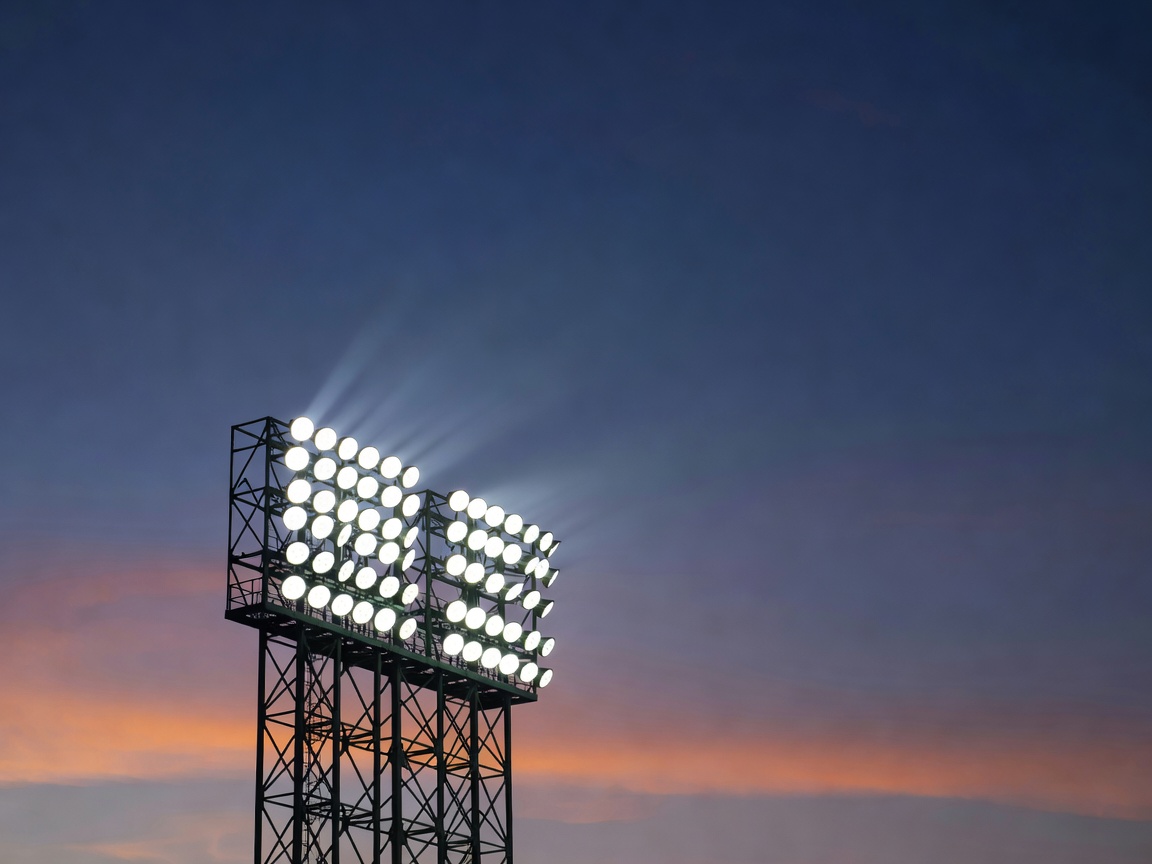
Repeat images may help identify a dark unit in an active group, an obscured lens or a changed aiming position. The usefulness depends on distance, sensor resolution, glare and line of sight. Bright arrays can saturate a camera, merging individual luminaires into a single patch. A change in exposure can make a functioning fixture appear weaker, while reflections can make an unlit fixture appear active.
Validate any automatic classification using representative scenes from the actual venue. Include partial outages, intentional dimming, wet surfaces and changing ambient light. Ask how the system handles uncertainty and whether a reviewer can inspect the original image. A confidence score is not a replacement for evidence, particularly when several fixtures overlap or the viewing angle hides the light-emitting surface.
Lighting performance needs appropriate measurements
A visually bright pitch can still have poor uniformity or fail a relevant performance requirement. Illuminance, glare and other lighting characteristics depend on measurement methods, positions and operating conditions. A robot carrying a calibrated light meter may assist a planned survey, but sensor height, orientation, shading by the platform and positional accuracy must all be considered. Simply attaching a meter does not establish a valid assessment.
EN 12193 concerns sports lighting, while EN 1838 addresses emergency lighting applications. Their roles differ, and the relevant edition, jurisdiction and venue requirements must be established by competent specialists. Broadcast needs, competition rules and local regulations may add further conditions. An image-based outage patrol should never be described as certification that the pitch or escape routes meet those requirements.
Use thermal observations with restraint
Thermal cameras can help locate unusual temperature patterns on accessible equipment when operating conditions support comparison. Surface emissivity, reflections, viewing angle, distance, airflow and electrical load all affect the result. An apparent hot spot on a reflective enclosure may be a reflection; a cool enclosure does not rule out an internal fault. Keep the visible-light image, thermal record and relevant operating context together.
ISO 18434-1 provides general procedures for thermography in machine condition monitoring and diagnostics. Its existence does not turn an unplanned walk past electrical cabinets into a competent thermal survey. Establish an appropriate method, instrument checks and qualified interpretation. Do not open electrical enclosures or approach exposed energised components merely to improve a robot's view.
Keep electrical intervention outside the patrol
A robot can flag a damaged fitting or an unusual thermal pattern. It should not independently authorise isolation, reset protective devices or change lighting scenes that staff rely on. Switching and maintenance must follow the venue's procedures and be undertaken by authorised, competent people. Work at height introduces another set of controls that remains necessary even if the first observation came from the ground.
IEC 60364 addresses low-voltage electrical installations, and IEC 62471 concerns photobiological safety of lamps and lamp systems. IEC 60529 describes enclosure protection classifications; an IP rating is not proof that equipment is suitable for every cleaning method or stadium environment. These are useful reference points for specialist discussions, not a universal checklist that a mobile camera can clear.
Finish with an identified, reviewable finding
The best lighting handover is modest and specific: a fixture identifier, the commanded operating state, a located image, relevant sensor information and the limits of the view. A human reviewer can then decide whether to investigate a control issue, inspect a luminaire, arrange calibrated testing or plan maintenance access. After work, repeat the appropriate check and link the result to the original finding.
Success is not a dramatic thermal picture or a count of lights seen. It is fewer ambiguous reports, an honest account of coverage and a clear separation between observation, measurement and electrical judgement.